Nissia Benghazi
In brief: In 2021, Nissia Benghazi — presented as a women’s rights activist — filed an incident report accusing the author of rape, while acknowledging to the police that there had been no violence, threat, surprise or physical coercion. The Élysée took control of the case in less than fifteen minutes. What followed were five years of proceedings, a falsified psychiatric assessment, and the orchestrated recruitment of two new “victims”: Sharon Hakim and Leslie Joy Morel. Drawing on the evidence, this text by Juan Branco recounts how the machinery worked.
I would like to tell you about a woman who destroyed part of my life, and about two others who decided to join her.
Her name is Nissia Benghazi.
Ms Benghazi presents herself to the courts, the experts and me as a serious political-science student who also runs an NGO for women’s rights (sic), with what was then a restrained public profile.
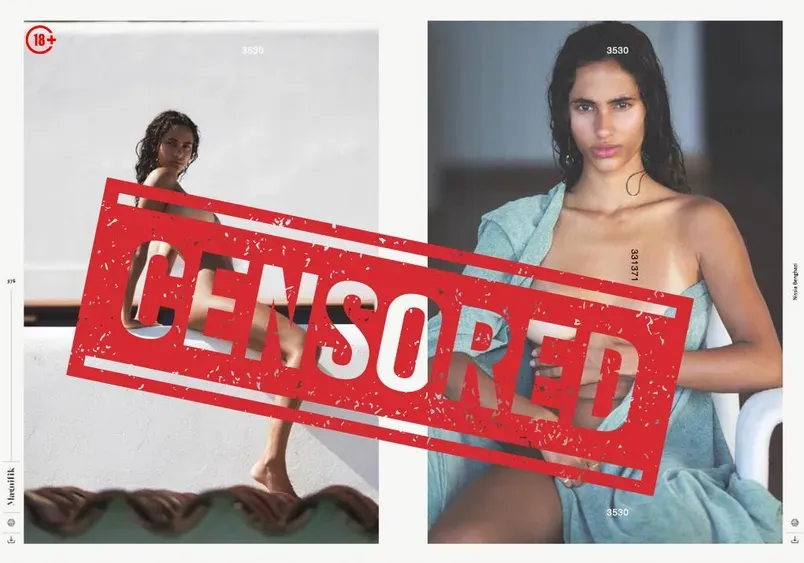
In reality, she divides her time between Mykonos, Ibiza and Saint-Tropez, where she sells intimacy for as much as three thousand euros a time. She works with “promoters”, including a certain Hermann Njoh, who offer women like her the opportunity to attend “private parties” and, when useful, apartments to rent, for a modest fee. A “tchoin-tchoin”, then, to use the vulgar expression: particularly noticed and appreciated on certain Reddit forums; possessing little more than a veneer of university education; “working” for phantom NGOs; and living lavishly, in the company of wealthy men, from luxury hotels to fine apartments where she is often accommodated free of charge.
This video capture of Google search results is provided solely for illustration and information, to show how certain images appear in publicly accessible search results. No claim of ownership is made over the images shown, and all rights remain with their respective holders.
0:00
/0:06
Photographies postées sur les réseaux sociaux et commercialisées par Nissia Benghazi quelques mois après les faits
Photographs posted on social media and sold by Nissia Benghazi a few months after the events
(First note: I have no problem with prostitutes — except when they claim to work for sham women’s-rights NGOs while selling themselves to the highest bidder in order to lure into their traps boys too foolish to suspect anything.)
Some photographs are also available on Fapello (click here to follow the link).
Nissia grew up in Dakar and decided to deploy her charms first in Lisbon, then in Paris.
Why take an interest in her? Because it was this woman who, after approaching me, set the notorious Lamaline affair in motion by falsely accusing me of rape in 2021.
I had never spoken about it, waiting to understand what was unfolding and trying not to speculate about a case that devastated me. It is now so deeply mired in ugliness and lies that I believe it useful to tell the truth about it. For this affair is far from over.
29 April 2021: the chronology of events
On 29 April 2021, then, Nissia Benghazi — who, two days earlier, had approached me on Instagram, introduced herself to me, spent the day, evening and night by my side, fallen asleep in my arms and kissed me before leaving — came back to tell me that she had filed an incident report and was considering withdrawing it.
You can imagine the shock and the violence of it.
I am a rather solitary man who attaches great importance to intimate relationships, in a particularly violent context where it has become difficult, within society and especially in my position, to meet people sincerely and to build relationships without destroying one another.
The shock was all the more violent because Ms Benghazi had come, without telling me, accompanied by a man who followed her from a distance. She toyed with her intentions, said she was considering recanting, pretended to question me about the events and, after what retrospectively resembles an attempt at extortion, realised that something was not working. She then casually turned to frivolous subjects before leaving, saying that she was sorry and hoped that we would see each other again.
I was left there, alone and shattered.
I would later discover what she had told the initially bewildered police officers, including Hanae Gonthier, who did not believe it for a second.
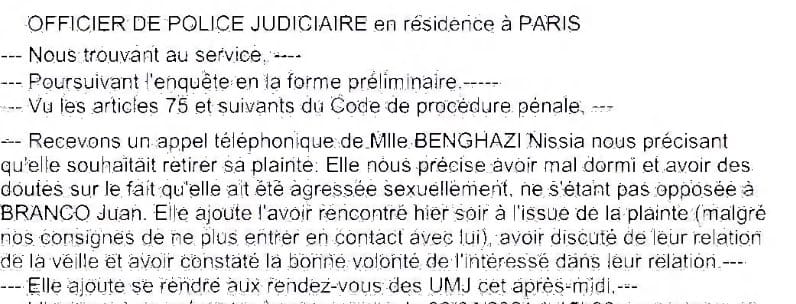
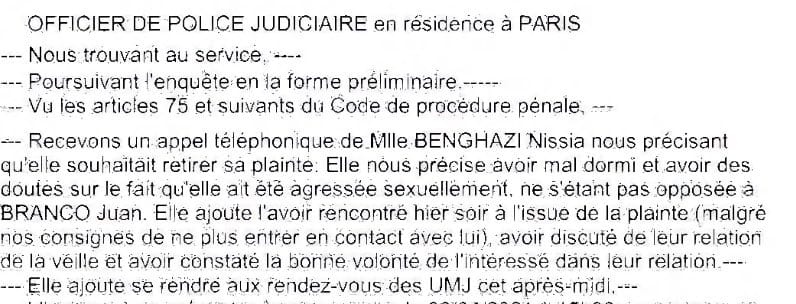
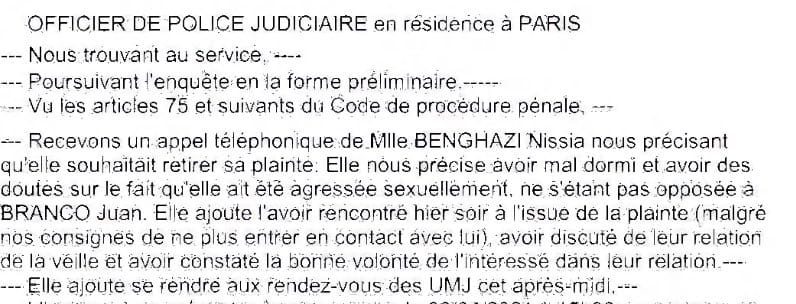
Everything turns on the ambiguity of her statements. When questioned, she quickly acknowledged that there had been no violence, threat, surprise or coercion. Before the police, Ms Benghazi seemed to grope for an answer, as if no one had quite explained to her which path she was meant to take.
She spoke of an opiate, then, after hesitating, claimed that I had “gone completely berserk” after taking one (1) Lamaline capsule, although it was after midnight, we were in the bedroom on my bed, and we were about to watch a film. One Lamaline capsule is, in dosage terms, the equivalent of one third of a Codoliprane tablet and half an espresso.
Ms Benghazi knew this.
The police questioned her.
“Completely berserk” — what do you mean? Again, Ms Benghazi did not seem very sure of herself. Well, berserk, she replied… meaning… Well, I had allegedly kissed her ear, shown her my feet (or asked to see hers; the versions vary, sic), and insisted on having sex. This had allegedly led her, terrified (sic), to remove her T-shirt and trousers, ask me to use a condom and finally consent to sexual intercourse, before remaining asleep naked beside me, waking after I did and leaving late the next morning. It was no longer merely eyebrows that rose, but the entire soul. A “rape” without violence, threat, physical coercion or surprise, resulting in zero days of incapacity for work and carried out, according to her, gently on top of everything else.




Obviously, Nissia Benghazi, who may have thought that a vague account would be enough to serve later as a bargaining chip, did not expect to be questioned so closely.
The police immediately informed their superiors, who in turn informed the authorities, who instantly understood the significance of the situation. The author of Crépuscule, the lawyer for the Yellow Vests and Pavlenski, the associate of Assange, and so on — suddenly in their hands.
Benghazi may not have expected that. She had probably planned to leave with a document she could trade. That is a hypothesis. We do not know. After all, when we met, she was the one who had done most of the talking. She did not seem especially interested in my worlds, except when we discussed society life.
A low hum began while Ms Benghazi was kept at the police station and asked to wait. That hum was the sound of the state machine, led by the Élysée, starting up and deciding to take control of a “flagged case”: a mechanism through which those in power can, in selected cases, require prosecutors to produce regular reports and keep them “informed”. As you will see, this intervention is established. Macron’s people have long teeth, and they like to score the parquet floor.
How the Élysée took control of the case
Less than fifteen minutes after the incident report began — a report that did not allege rape and would ultimately be classified under “other offences”, for want of any possible criminal categorisation — a preliminary investigation was opened on the orders and initiative of Paris Public Prosecutor Rémi Heitz, one of the Macron camp’s most faithful servants, despite a standing policy that prohibited him from doing so without a prior complaint by the victim. The Prosecutor knew this. A car was therefore immediately and specially dispatched to collect Ms Benghazi and have her sign a complaint away from the police station where she had been, and where the policewoman had told her that the facts she described did not amount to rape, taking her instead to the more protected and controlled 1st Judicial Police District. The machine was in motion. From an incident report that Ms Benghazi, in a panic and trying to contact me during the journey, would seek to withdraw less than twenty-four hours later — telling the police that she felt ill and had never been coerced — and which alleged no rape, a preliminary investigation was thus opened contrary to the prosecution service’s own policy, with a special mobilisation of police resources.
Ms Benghazi, who had therefore called me while travelling to the 1st Judicial Police District — an odd reflex, as though she were under pressure — was firmly instructed not to see me again. She nevertheless chose to do so, to tell me of her “uncertainties”, and, once home, to call the police station the following day to say that she had not been raped and, one imagines because she had not achieved her objectives, that she wished to withdraw her incident report.
That call matters. Ms Benghazi would later claim that she made it because of media pressure. Yet the police records show that it occurred one hour before the first article appeared. One hour: the time it took prosecutors and police, acting on instructions from the Élysée, to leak the case in order to pressure Benghazi. “I have never seen a leak happen so fast,” a psychiatric expert would tell me during the investigation. Indeed. But the point was to avert the irreparable. The briefing to the press reported a complaint which, two days later, Ms Benghazi would tell investigators she did not remember filing; it became a campaign to intimidate her. Aziz Zemouri, the late journalist, leaked her place of birth and her statements. And it worked. Ms Benghazi was terrified.
Terrified, it seems, to the point of writing to me in outrage and asking me for help. Me, the man supposedly to have raped her. Me, the man she had just tried to extort. She told the investigator that she did not feel protected by the police. At that moment, she seemed sincere. She understood that she was falling into a trap far larger than herself, one she had helped create. Less than an hour after calling the police station to recant — while the officer had most conveniently asked her to wait until Monday — the whole of France was discussing her case and her name threatened to leak at any moment.
Nissia Benghazi, whom in my great naïveté I still believed sincere, overcame her distress and, after stumbling over her words, was contacted by the police station on Monday before she went there, for no apparent reason.
In the exchange as transcribed, she said that she did not remember filing a complaint and, when the police officer read out the statement they had made her sign, said that she needed time to think. In the meantime, a man named Pierre-Antoine Rousset had been assiduously pursuing her.
He was the “director” of a modelling “agency” — in reality, a fictitious company registered at a mailbox, with no accounts and unknown in the profession. He had first spoken with her by telephone two weeks before the events and would become her principal contact during this period. He insistently “suggested” a lawyer who would take charge of her. It was this lawyer, rather than Benghazi, who ultimately called the police station the next day to say that his new client was confused and under media pressure, a statement that would remain in the file.
From that moment, shepherded by this colleague and another, Ms Benghazi decided to lie shamelessly about everything in an attempt to save herself. Would she be paid? Who was Ms Benghazi, who would never stop inventing facts on every front in order to save herself? A little gold-digger who miscalculated her move and would now be taken over? A prostitute skilled at feigning naïveté, who had been directed from the outset? A lost soul, ceaselessly manipulated? What followed would reveal the answer.
My hell began. I had just entered my thirties and watched my life being destroyed: taken into police custody for the sheer pleasure of humiliating me; custody emptied of meaning by Nissia Benghazi’s refusal to participate in a confrontation and by the psychiatrist’s refusal to attend (he had understood that the case was fabricated).
A falsified psychiatric assessment
I was released because there was insufficient evidence to bring me before a judge — or rather because prosecutors did not have the right judge to hand — yet, strangely, they refused to close the case. A few days later, I was summoned fifty kilometres from Paris. Curiously, the prosecution service had been unable to find a single psychiatric expert in Paris. I found myself with a doctor, Franck Moquin, originally trained as a general practitioner, who for six hours mounted an extraordinary offensive and tried every possible means to destabilise me. Disciplined by his professional body, facing numerous proceedings, absent from the lists of judicial experts and in cahoots with prosecutors who used him to steer certain sensitive cases — including the Besson case — he was a man, I later discovered, who had become a psychiatrist through a form of accreditation of prior learning and was not even registered on the expert lists. Forced to acknowledge that I was not likely to have committed the alleged acts, he nevertheless produced a hostile report which we would succeed in proving had been… falsified, putting words in my mouth that I had never uttered. Meanwhile, Ms Benghazi’s assessment, dispatched in thirty minutes by video call, certified a “double hold” over her — one I had supposedly imposed in less than twelve hours! (sic) — conveniently filling the gaps in her account and matching the new version constructed by her lawyer: that she had been raped through… psychological coercion. Like mine, that assessment would be wholly contradicted by the assessment ordered during the judicial investigation, which instead concluded that Ms Benghazi was neither impressionable nor open to influence. But no matter.
The overriding need was already to save the case. Something was afoot. Prosecutors had been patient, hoping that the intense media coverage would, as so often happens, produce other statements — more or less serious or self-interested — to bolster their case. But nothing came. That was self-evident. I am a rather shy, respectful young man, accustomed to long relationships, who had only recently begun to meet people more casually after a highly political romantic break-up.
We will come back to that. The prosecution service had nothing to get its teeth into. So, having instrumentalised the experts, it casually decided simply to give Benghazi access to the case file, allowing her to adjust her account in light of my statements before she was questioned again. Thus informed of what I had said, Benghazi adjusted her own statements and tried — clumsily — to construct the theory of “psychological coercion”. This led to the opening of a judicial investigation monitored directly by the Élysée, which appears to have been the direct source of the press leaks through Macron’s justice adviser, Hélène Davo, and which would be informed “in advance” of the decision to place me under formal investigation (Ministère de l’injustice, Grasset).
Two years of a judicial commission “under pressure”
It did not stop there. The case was particularly weak, to put it mildly. Through its knowledge of the assignment roster, the prosecution service secured the appointment of a weak judge entirely submissive to its wishes, plucked straight from the depths of the judiciary’s third competitive entrance track and second-rate posts, then propelled five months earlier — without any relevant skill or experience — into one of the most powerful positions in Paris. (Nadia Zaïd, if you are reading.) She immediately issued a judicial commission covering my private life, which would extend for more than two years, and entrusted it to the very department that had handled the preliminary investigation: the 1st Judicial Police District, headed by Ms
Marie-Élisabeth Ciattoni. She would sign every summary report and personally oversee the case, even though, in criminal proceedings, I was representing a police officer named Olivier Pascual, a former colleague of the head of the Judicial Police, who accused them in particular of psychological harassment, covering up various forms of trafficking and serious breaches of professional ethics. Less than three months earlier, I had accompanied him to file a complaint against her with the police inspectorate, the IGPN. The result was obvious: leaks multiplied; every defence witness was intimidated or placed under surveillance; and a whole series of manoeuvres “outside the case file” proliferated.
Among those witnesses was none other than Benghazi’s own boyfriend at the time. He stated — as would later be confirmed — that the day after the events she had tried to turn him on by recounting her “rape” while “laughing”, traumatising him to the point that he asked to be interviewed.
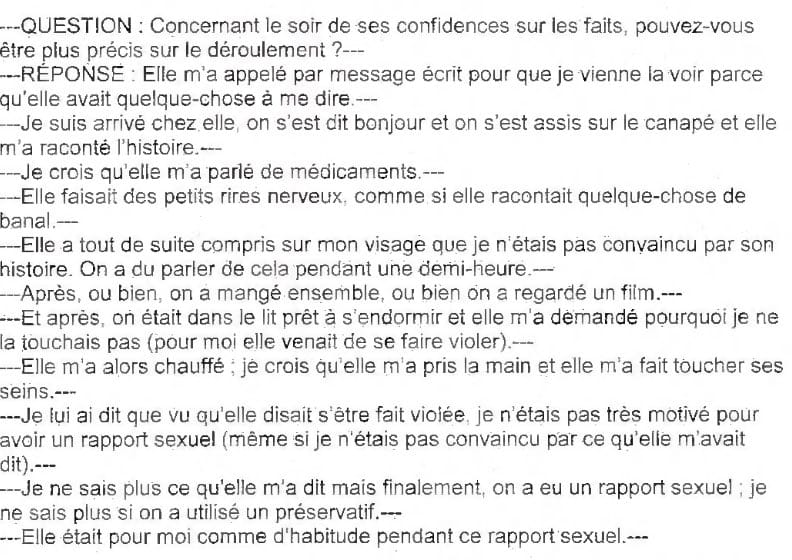
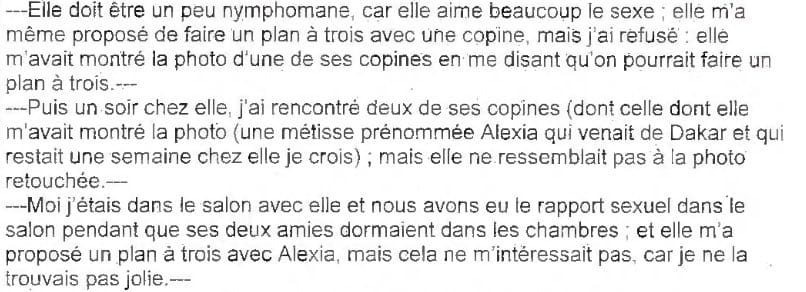
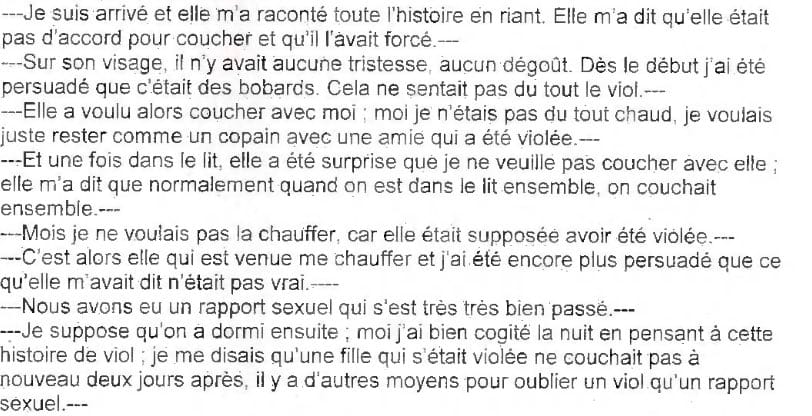
Embarrassed, Nissia Benghazi would try to deny having had sex with him, before attempting to recover by producing a forgery: truncated messages intended to show that he was acting out of jealousy. Nissia Benghazi continued to lie. She claimed not to know her “promoter” until he confirmed that he worked with her; repeatedly destroyed evidence; tried to plant false testimony; and so on. We discovered it and demonstrated it. Nothing was done. The judge rejected our requests for investigative steps, acted as though nothing had happened and continued on her way.
The whole thing was lamentable, but it now reached new heights. The masterstroke: one week after I was placed under formal investigation, Nissia Benghazi appeared in an advertisement in which, smiling broadly at the camera, she displayed a fake medicine box with which she had just drugged her companion, while a banner carried the following message: “When it comes to medicine, two warnings are better than one.”
0:00
/0:11
What was happening to Ms Benghazi? Was she intoxicated by the success of her lie? Was she being financed, supported? The reality is that, having belonged to a no-name agency without even proper premises, she was meanwhile taken up by a more prestigious one, which launched her career and whose founder was received at the Élysée.
How could anyone conceive of giving the most spectacular middle finger ever seen to justice, to real victims and, obviously, to the people involved in the proceedings? We do not know. But it visibly troubled no one.
One might have expected the judges to recover some dignity at that point.
Nothing happened. A few days later, after telling a second expert that the events had profoundly affected her sense of modesty and intimacy, Benghazi left, between nights in luxury hotels, for a photo shoot in Spain with a photographer accused of rape, David Bellemere — the shoot that opened this thread.
Humiliated and devastated though I was, I continued to act and multiplied the commitments that, forgive me, irritated the Élysée. Above all, all my former partners, duly summoned, testified to my gentleness and to their disbelief.
The case was going nowhere.
The months passed and nothing was found.
The judicial commission’s deadlines expired. If nothing could be found, it seems, something would have to be invented.
And this is where things become interesting.
Nissia Benghazi lied badly, had got the effects of Lamaline completely wrong, had clearly not been prepared well enough and, on top of that, made no effort to keep a low profile: she multiplied parties in luxury venues and appeared not at all traumatised. I continued to fight and to defend people in difficulty. I became the lawyer for the “big brothers” and for Kémi Séba; we advanced proceedings against the European Union over migration policies; and we made an enormous din by exposing the links between Paris Saint-Germain, Qatar and the Élysée.
Above all, I continued to build my work of revelation and political thought, through books that were read and had significant effects. Admittedly, one year before critical elections, they had destroyed my life, devastated those close to me, made me feel profound shame and isolated me. Admittedly, there were days when I struggled to walk. Admittedly, the media finally had a pretext to deny me a voice, and part of the left, manipulated, had been forced to distance itself from me. Admittedly, I could no longer teach, was deeply humiliated and knew that they now had a pretext to monitor me.
But they had not managed to eliminate me. A race against time began. Paris was scoured for new victims. That is what the proceedings were for. Some were even pursued! The problem was that every statement was consistent: a gentle, kind and considerate man, never violent, rather solitary, neither impulsive nor remotely aggressive. Time passed, deadlines expired and things began to grow urgent.
Sharon Hakim: the director recruited after the deadline
It was then that, in extremis and from nowhere, a woman appeared.
Her name? Sharon Hakim, aged 29. Her occupation? Failed actress.
Her qualification? Leslie Joy Morel — whom I would discover to be Gabriel Attal’s… best friend — had introduced us in 2017, and she had known me for a few months.
Ms Hakim was furious with me. She knew me poorly; I had never admitted her into my inner circle. Yet she was the principal source for a 2021 Mediapart article whose sole merit was to show that this outlet could do worse than all the press it endlessly attacks whenever its interests are at stake. Remember: Mediapart, whose founder had been extremely angry with me since I recalled that these heralds of women’s rights and integrity had been created with the support of a former pimp turned billionaire and closest ally of Emmanuel Macron. https://m.facebook.com/story.php?story_fbid=1570054533366527&id=100010859856042…
Mediapart therefore decided to investigate me — or rather, my intimate life — for two years, relying on Sharon Hakim, who told them in 2019 that my behaviour towards women was problematic and should be investigated. The article, which appeared conveniently just after my police custody ended — they gave me forty-eight hours to answer dozens of questions — was a heap of nonsense that tried, in succession, to portray me as a paedophile, an exhibitionist, a voyeur, a rapist and a harasser.
It was in fact empty and should never have been published. It prompted a huge backlash from subscribers, who left six hundred negative comments out of six hundred and fifty, understanding what was happening.
In short, Mediapart — unhappy that I had revealed it was founded with money from a pimp, and seeing that the case was heading towards closure without further action — resurrected Sharon Hakim from the realm of the dead. Not only had she told them any amount of nonsense, but she could find no serious person to accompany her.
The result: before investigators, Ms Hakim said that she was “disappointed” by the outcome.
But she did not let go.
Informed of the investigation’s progress in breach of judicial secrecy, she presented herself “spontaneously” to the very investigator in charge of my case. “Spontaneously.”
Except that, when questioned by the judge…
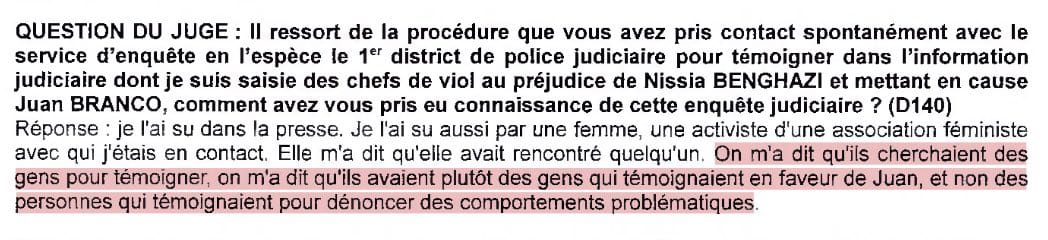
Sharon Hakim, then — who had pestered me for months in an attempt to go out with me — “spontaneously” found the investigator in charge of my case (what talent), after having “spontaneously” approached Mediapart just as its director was publicly threatening me. She finally appeared before a relieved investigator who knew that he was out of time, but who had been promised a compelling victim.
She then told him what she had already told Mediapart: that one day in 2017 I had allegedly placed a hand on her buttocks while, according to her, we were drawing closer together on my bed late at night to see, as she put it, “who would give in first”. That was all.
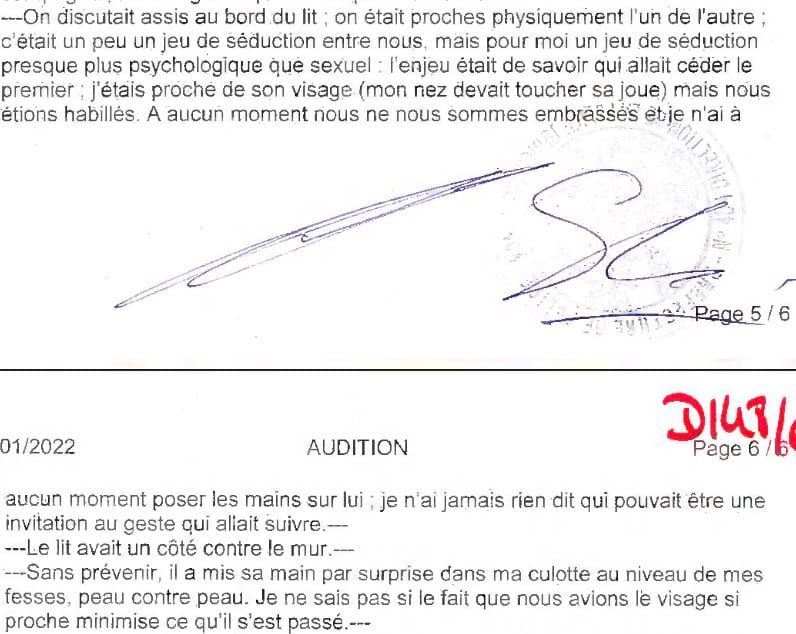
Yeah. The scene was invented, but no matter. The investigator was embarrassed. He nevertheless invited her — and would do so repeatedly — to file a complaint for sexual assault. She refused. She did not want to “risk being prosecuted for making a malicious false accusation”, he wrote to the judge.
Not very bold, this wasp who had been buzzing for two years in an attempt to destroy me. Although she refused to join the proceedings as a civil party, said that she had not been a victim and failed to attend several summonses, the sanction fell on 1 June — the date Hanouna was released, and while my client Ousmane Sonko was fighting for the fate of his country in Senegal, something that did not move the judge, who absolutely insisted that I be summoned on that very date: I was placed under formal investigation for sexual assault. Six months after her “assault”, the same wreck of a woman who had just moved heaven and earth to harm me before trying to change sides wrote this to me.
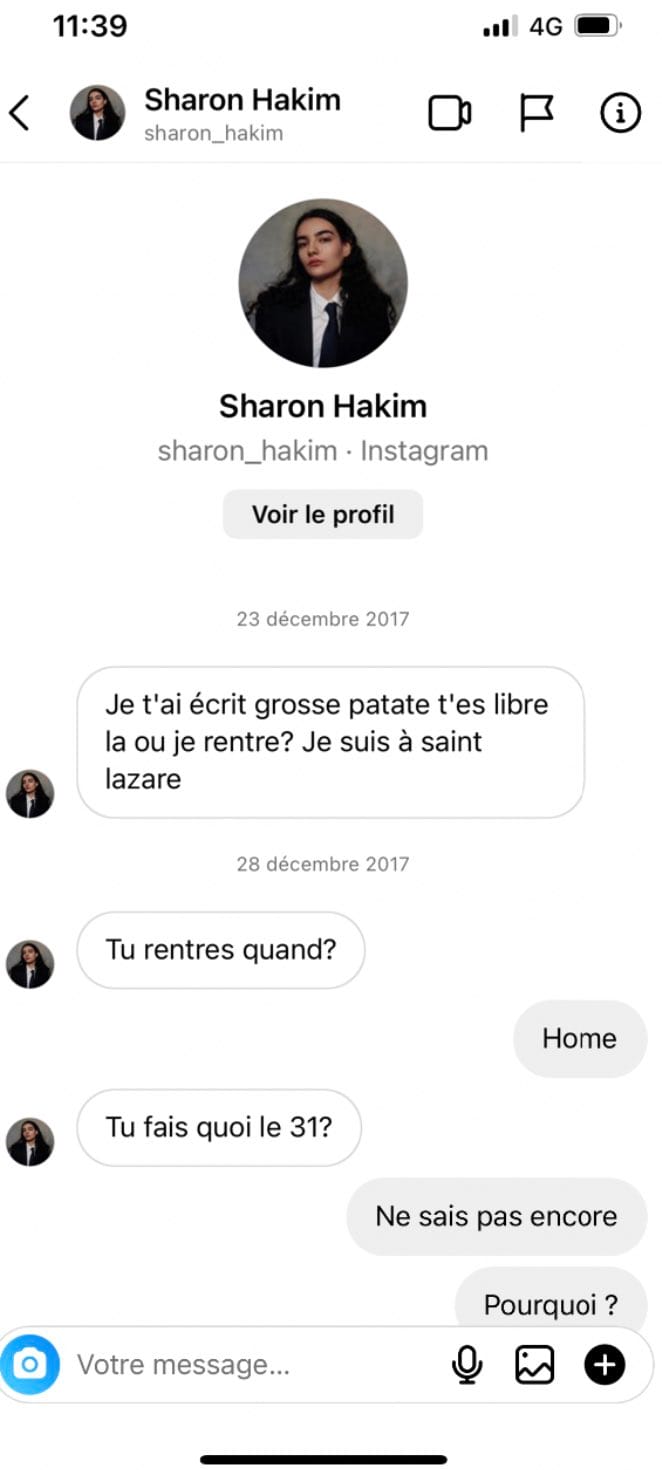
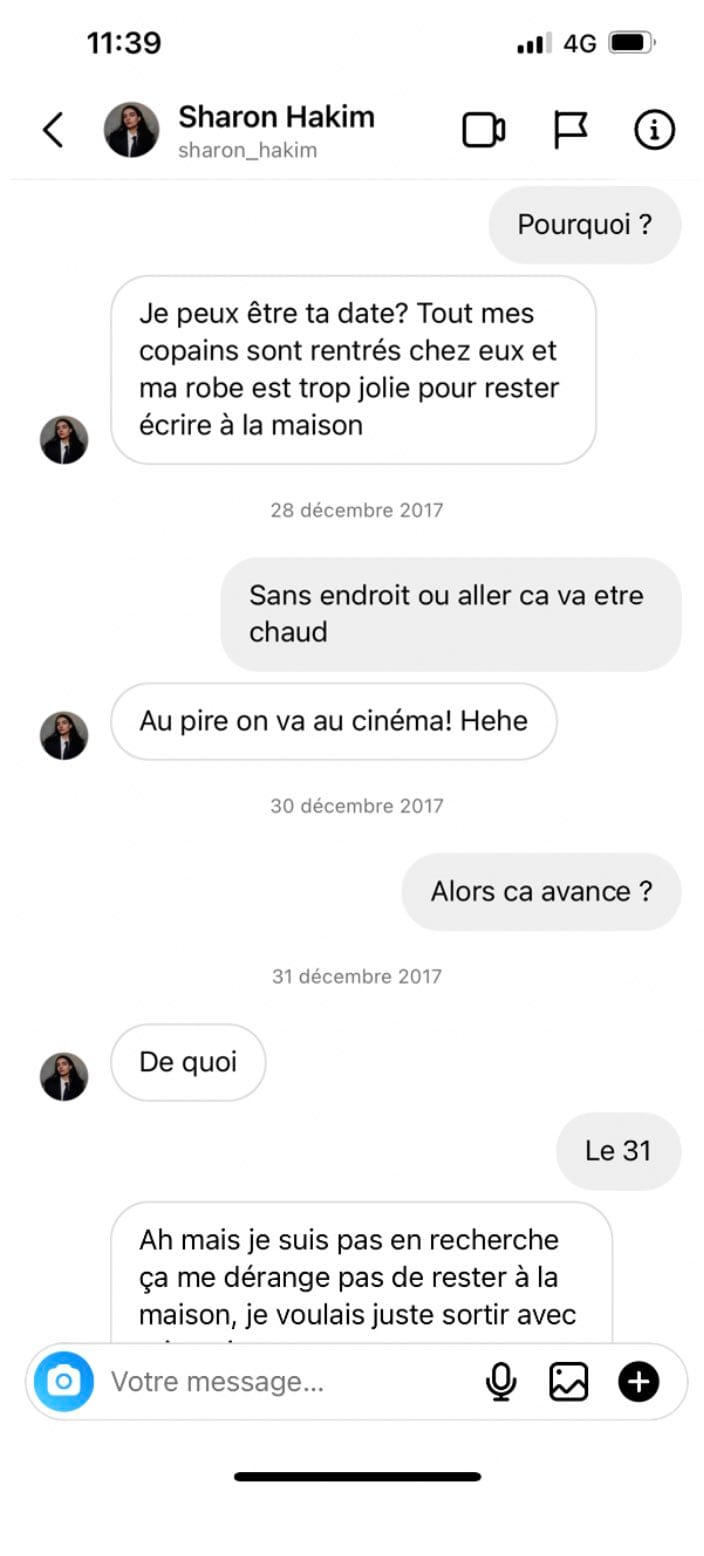
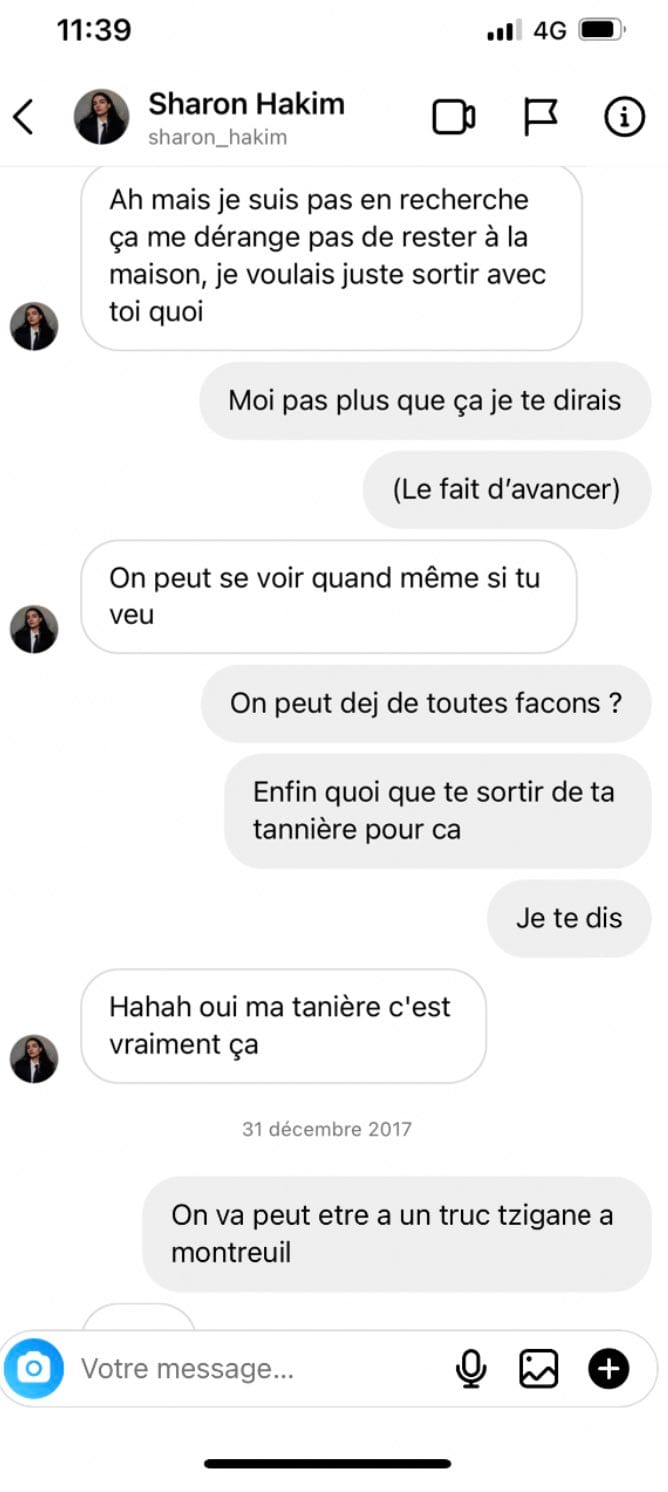
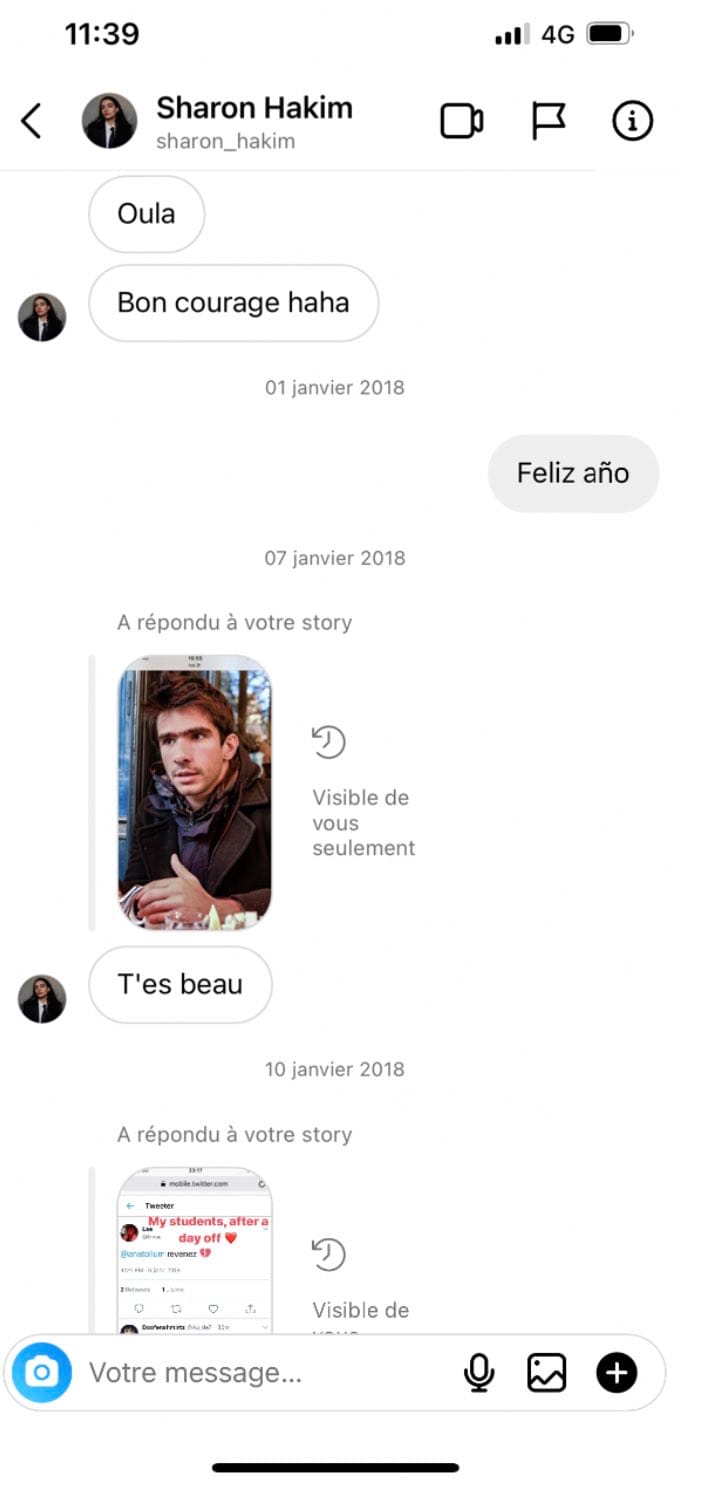
Who could fail to recognise here the words of a woman profoundly affected?
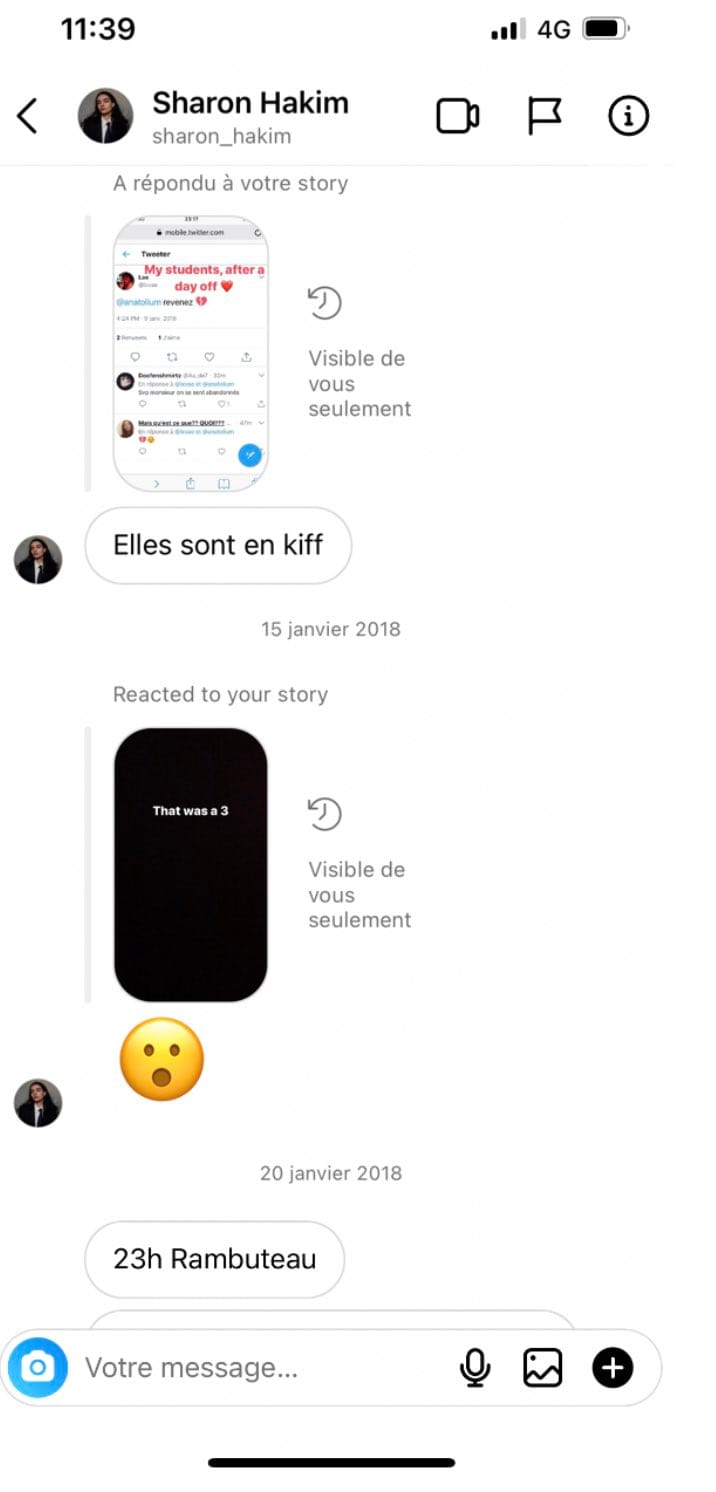
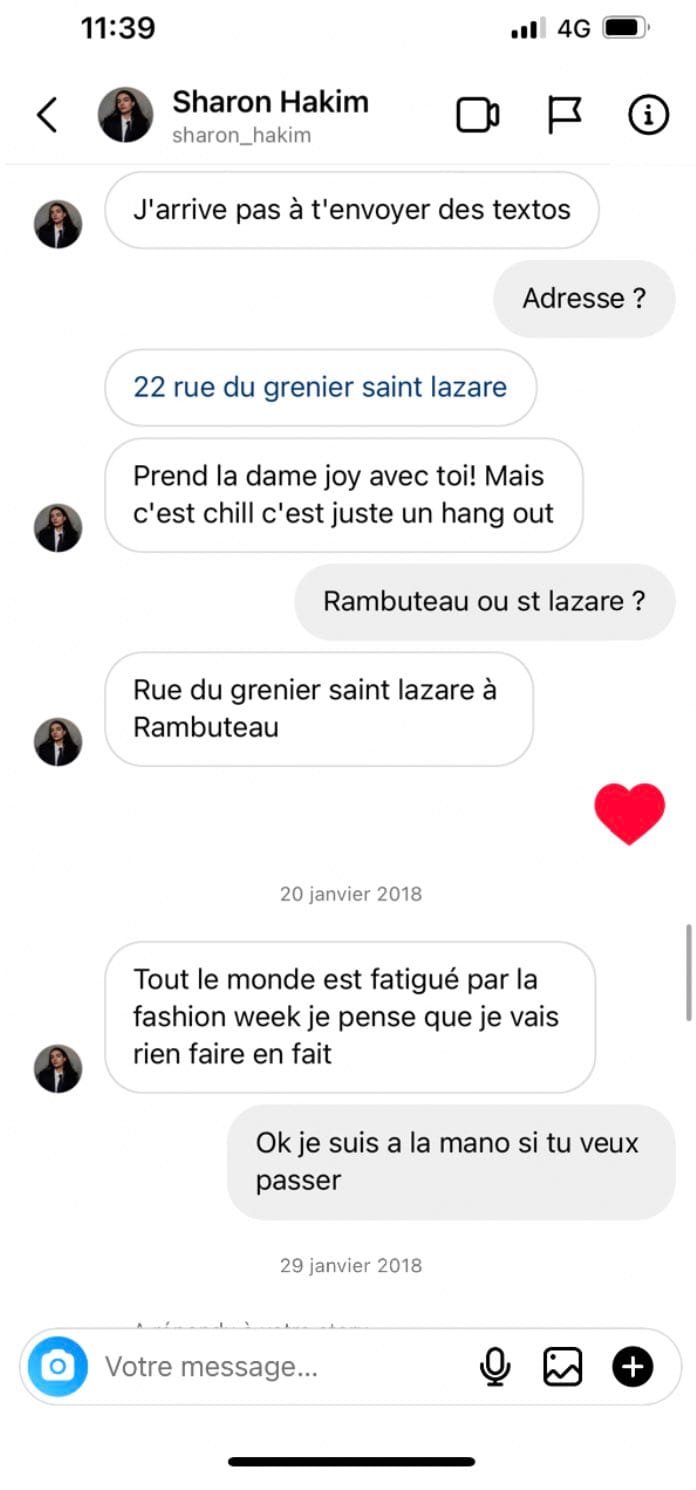
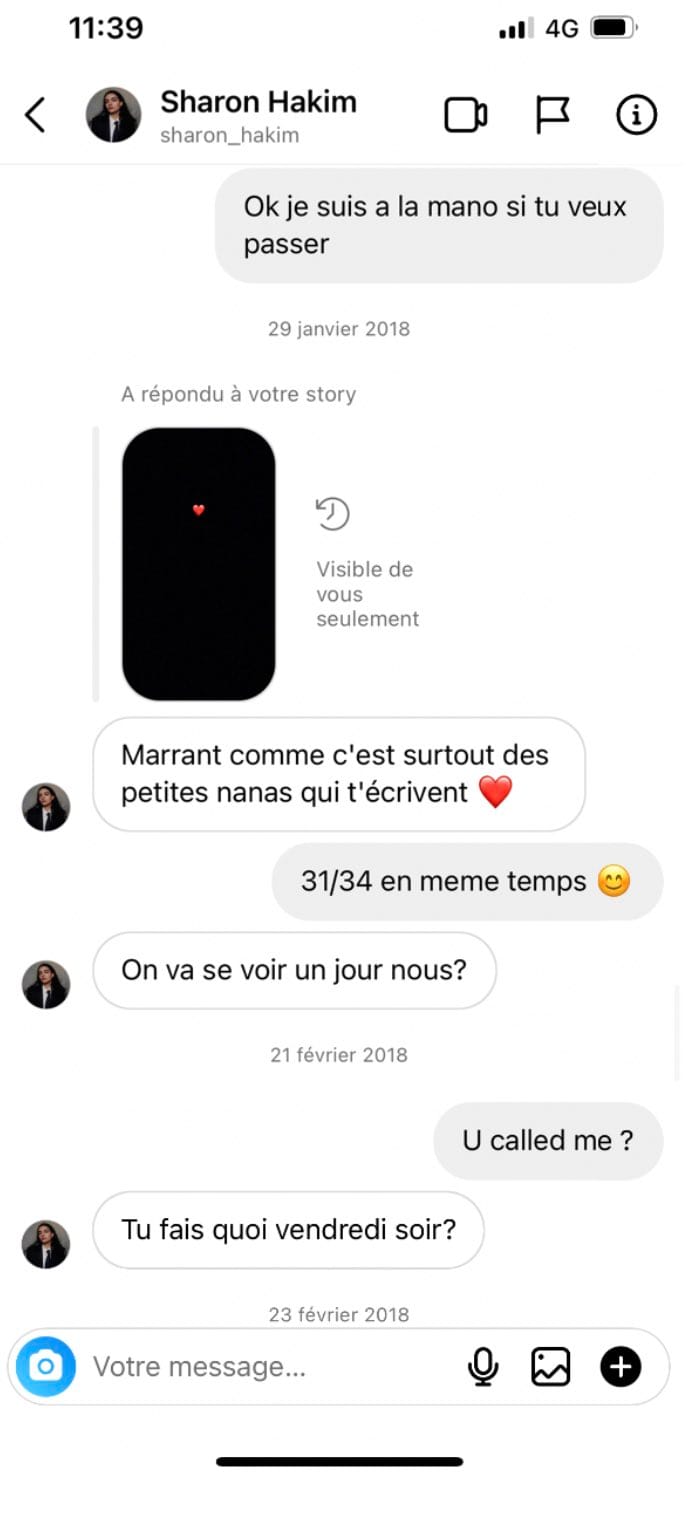
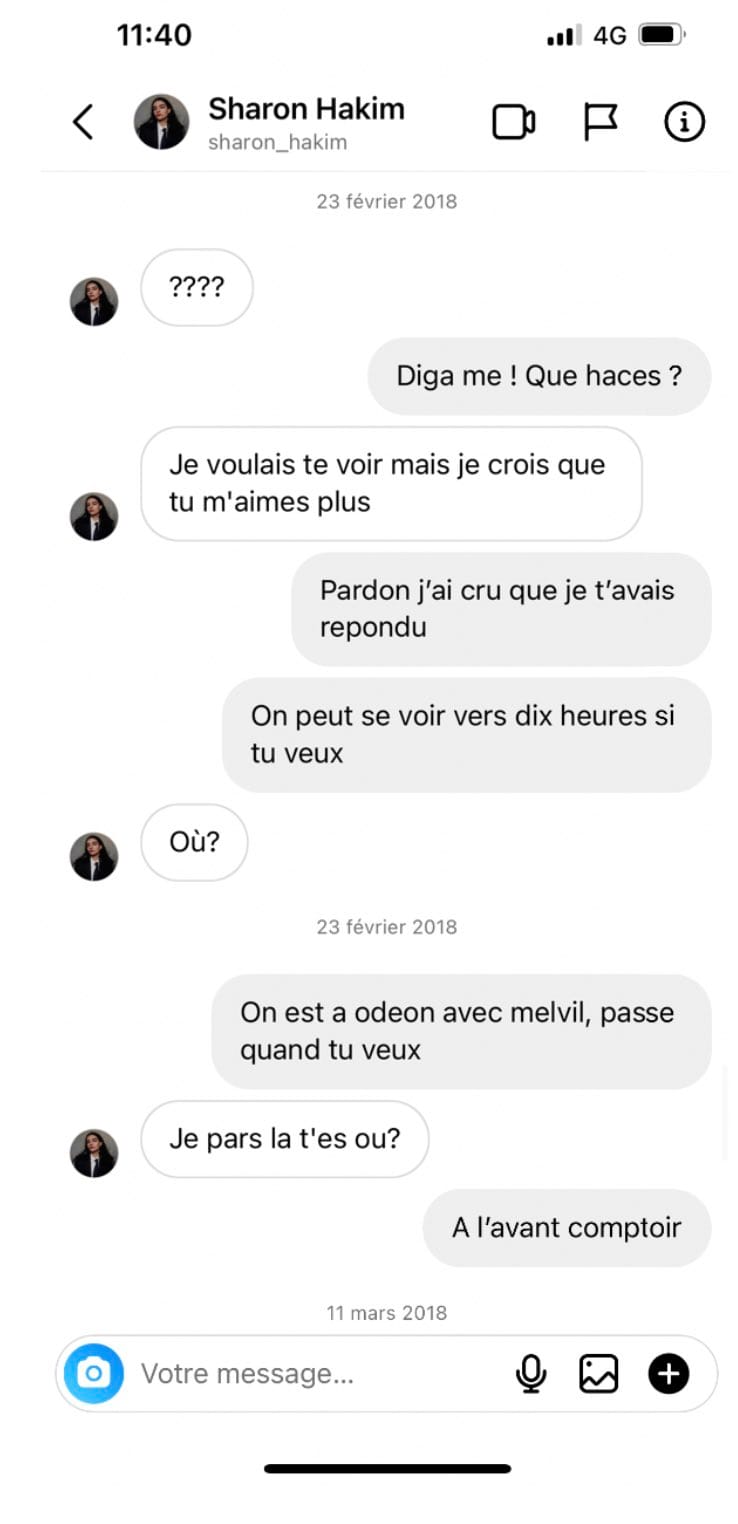
Nightmare over? No, you must be joking. We could not stop halfway. Since formal charges came so cheaply, why not add some more?
Leslie Joy Morel, Gabriel Attal’s intimate friend
Thus Sharon, never sparing in her delights and desperate to coordinate, revealed that she had approached… Gabriel Attal’s best friend — you could not make it up — Leslie Joy Morel, in an attempt to persuade her to join in. Leslie Joy Morel is a strange specimen. I was fond of her. She attended Sciences Po Paris and, after dreaming of becoming an actress, collapsed, ended up in a cannery in Vannes and destroyed her life, after having been the closest friend of Macronism’s darling.
A strange specimen, then, who liked me very much — check my Instagram in 2017 — until, suffering a breakdown or being carefully guided (no matter, you will see), she convinced herself that my family was actually made up of vampires. True story: it is in the case file.
Leslie, then: a lovely woman, completely unhinged, close to Macron’s circle, approached by Sharon in an attempt to assemble a case alongside a third accomplice, Léa Mandana Roche, who had already been sentenced to six months’ imprisonment for making malicious false rape accusations, which led to her removal. Sharon, Leslie and, of course, Gabriel himself — far too well informed and far too delighted by what was being plotted — were informed from the outset of everything at issue. Why did the investigation last so long?
For this very reason. It was necessary — and it took two years — to bring these people together, brief them and condition them to testify. And what testimony! Leslie was hardly the year’s finest specimen. In two outlandish statements, nevertheless prepared and laboriously written over several months with investigators’ help — investigators who went so far as to chase her through Paris to make her sign them — she admittedly claimed that she had been raped on the night of 8–9 November 2017. But the text messages found immediately showed that the day after the alleged events she had written to me that she had slept like a bear, appearing very happy and excited about what had just happened (usernames used at the time).
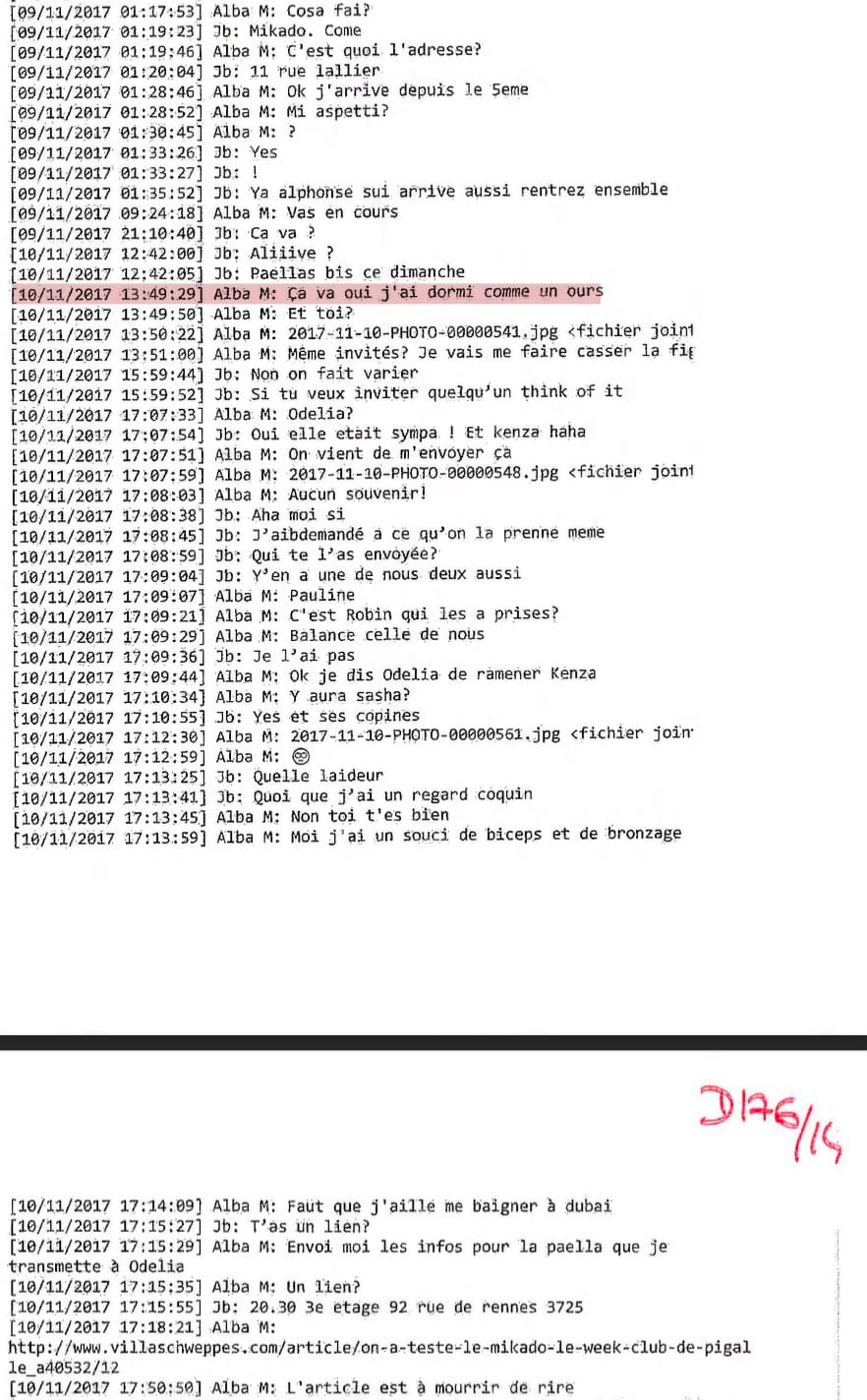
Above all, it became clear that she did not describe a rape; across forty pages, ninety per cent was devoted to her life, her failures and her love affairs. Statements this outlandish are normally closed immediately and lead at once to proceedings for making a malicious false accusation. Here, the opposite occurred. She was invited to file a complaint and join the proceedings as a civil party. Because yes: like Ms Benghazi and Ms Hakim, Ms Morel — whom investigators had gone out to find — did not file a complaint spontaneously. On the contrary, every effort was made to persuade her to do so. One would welcome such zeal in the handling of every sexual-violence case. How did she describe this alleged rape, invoked five years after the event? A new problem emerged. At no point did Ms Morel claim that she had opposed the sexual act. Once again: no threat, surprise, coercion or violence. When pressed, she even gave this extraordinary answer:
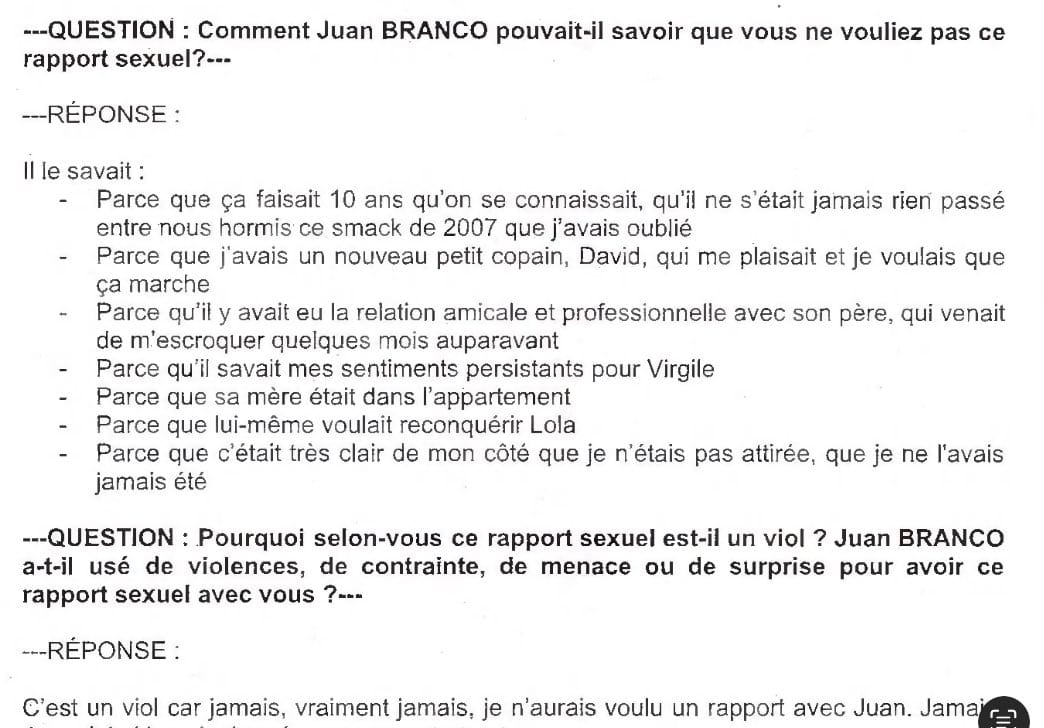
Amid forty pages of delusions about satanic rituals, her lost love for a young gay man, and reflections on her failures, my family and her life, Ms Morel had — after being heavily solicited — admittedly ended up using the word “rape”.
But she also admitted that two days later she had gone to a party and celebrated until dawn in the very place where the events had allegedly occurred; continued corresponding as though nothing had happened; said that she had slept like a bear on the night in question; and was believed by no one in her closest circle, who knew her talent for fabrication and the profound depression she had been experiencing for months, which led her to accuse anyone of anything. No matter. She had used the word “rape” in proceedings determined by every possible means to continue, and that was all that counted. On 1 June 2023 — eighteen months after she had been interviewed and five years after the alleged events — I was placed under formal investigation.
False accusations: a tool of political neutralisation
There it is. This is so important that I had to speak about it. You can imagine the impact all this can have — that impact is the only thing sought. This is the reality behind the particularly violent terms that those in power like to pour into the public sphere, exploiting the impunity that long prevailed in these matters to instrumentalise feminist causes and devastate everything. This case was publicised a thousand times over in order to destroy me, through a deliberate and instrumental breach of judicial secrecy that no one cared about, with the sole aim of destroying me by using words — “rape”, “sexual assault” — unrelated to reality. To isolate and humiliate me. To make me feel ashamed and neutralise me. By leaking selected information drop by drop whenever it suited them.
By dragging out, year after year, proceedings that should never have existed, the better to keep me trembling and prolong the ordeal.
By accumulating details about my intimate life to maintain the pressure. Killing silently, to ensure that the other person is stripped of all dignity.
Why I am breaking my silence now
To speak about it is to free oneself from this one-sided blackmail, in which they may say anything, do anything and claim anything, while we must remain silent and endure.
To do so openly, and to provide the evidence supporting what is said, is to recover one’s condition as a man where they had stolen it.
I am under no illusion about the danger I represented, and continue to represent, to many people in this country that chose to welcome and naturalise me.
And precisely because that is so, I will never give up. I warn them: if they persist, we will redouble our efforts. Gatsa Gatsa, as the Senegalese say. I have nothing to reproach myself for and, to put it very crudely: fuck them, and everyone who has served as their knowing or unknowing relay.
They are ugliness itself, the most indecent thing humanity has ever produced.
It is unforgivable to instrumentalise these issues in order to destroy people who threaten your interests, because in doing so you damage the lives of thousands of others.
False accusations and instrumental proceedings are a scourge that I have seen permanently destroy dozens of people, while real victims continue to be ignored, threatened and crushed.
Sexual violence is a fundamental civilisational issue because it permanently destroys people, bars access to desire and love, and produces pathologies that threaten society.
It must be severely punished, like every form of exploitation of another person that violates their dignity.
The struggle against it cannot become an instrument in the service of the powerful without being wholly perverted.
This explains, in particular, my repeated support for Marvel Fitness, which I was never forgiven.
I also want to tell them that I am not, and never will be, ashamed, because I am not like them — people who thrive, like the Interior Minister, on exploitation and blackmail in their relations with women.
We fight for ideas, for people who suffer from all of this and whom we have a responsibility to protect.
We know perfectly well why all this is being done. And that allows me to deliver one final message to all those who make themselves complicit in it — for a position here, a little visibility there, or simply to cause pain:
You disgust me.
We will keep fighting until you fall.
Thoughts.
Discussion des membres